Ukraine Intensifies Maritime Attacks Near Crimea
Ukraine's military has stepped up its offensive near Russia-annexed Crimea, targeting maritime supply routes following previous assaults on land corridors to the peninsula. The Ukrainian military's drone force commander, known by the pseudonym Magyar, reported that at least 36 Russian ships have been struck in the Sea of Azov over the past four days. The majority of these vessels are part of Russia's 'shadow fleet' of commercial oil tankers.
The exact number of affected ships remains uncertain as some may have been hit multiple times, and not all incidents have been independently confirmed. These losses pose a significant challenge to Russia's naval operations and President Vladimir Putin's assurance of stable fuel supplies. The strikes are part of Ukraine's broader strategy to impose a 'logistics lockdown' on Crimea, aiming to cut off supply routes.
Impact on Russian Maritime Operations
The Sea of Azov is commonly used by tankers near the northeastern coast of Crimea, due to the presence of an onshore oil loading facility at Kerch port. Following an attack on Kerch port last month, satellite imagery analyzed by BBC Verify indicated a reduction in tanker numbers in the area.
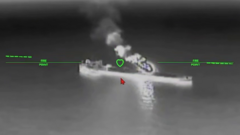
Footage of recent night-time strikes has been circulated on social media, with Magyar detailing daily attacks between July 6 and 9. The governor of Russia's Rostov region, Yuri Slyusar, confirmed attacks on two empty tankers in Taganrog Bay, which continued to burn the following day. Brovdi stated that two tankers targeted earlier in the week were transporting approximately 7,000 tons of fuel from Taganrog to Crimea.
Nasa satellite data showed a significant plume of smoke rising from a ship near the Crimean coast since July 6, likely resulting from the initial wave of Ukrainian drone strikes. Around 20 vessels reportedly left the area, moving towards the Black Sea.
Broader Implications of the Attacks
The Ukrainian Unmanned Systems Forces identified several tankers involved in the attacks, including Venera-3, Sanar-1, Sanar-17, Klimena, Thetis, Alexey Savrasov, and Penelopa. Additionally, a passenger ferry and a bulk carrier in Kerch port were targeted, with images shared on social platforms.
Leaving the Sea of Azov does not guarantee safety from Ukraine's drones, as evidenced by footage of an attack on the sanctioned tanker Blue near Yalta, a resort city in Crimea. Although the location could not be independently verified, Ukraine claimed responsibility for the strike.
These maritime attacks coincide with ongoing assaults on Russian oil refineries, causing widespread fuel shortages across Russia, including in major cities like Moscow and St Petersburg. Ukrainian President Volodymyr Zelensky has defended these actions as a response to Russian strikes, insisting that Russians must understand their state's role in the conflict.
Recent attacks also targeted oil depots in Tver and Stavropol regions and a terminal in Rostov, believed to be Yug Rusi, further exacerbating the fuel crisis.
International Reactions and Strategic Considerations
U.S. President Donald Trump characterized Ukraine's drone strategy as an escalation, but noted it could potentially lead to a resolution during a meeting with Zelensky at the NATO summit in Ankara. The scale of Ukraine's drone operations has intensified, with reports of 12 tanker attacks in a single night, and Russian sources have not disputed these claims.
The 'Military Informant' Telegram channel criticized the lack of protection for the tankers, describing the situation as a 'shooting gallery' for Ukrainian drones. Mikhail Zvinchuk, author of the 'Rybar' Telegram channel, noted the Black Sea Fleet's limited defensive capabilities.
These strikes are a significant setback for Russia, particularly given the declining oil refining capacity and fuel shortages in Crimea. President Putin previously estimated Crimea's monthly fuel requirement at 70,000 tons, pledging to secure supplies by land and sea. However, the recent attacks on tankers in the Sea of Azov suggest they may have been transporting more than previously anticipated.
Fuel rationing is now in effect in over 90% of Russian regions, with long queues reported at filling stations in major cities. In Crimea, authorities face challenges managing power and transport disruptions. Ukraine's military continues to threaten both land and sea supply routes to the peninsula.
Source: Original Article