Iran's Leadership Change After Supreme Leader's Burial
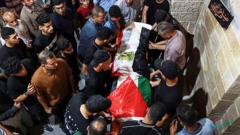
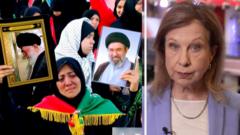
Iran is navigating a period of uncertainty following the burial of its late supreme leader, Ayatollah Ali Khamenei. The funeral, which took place after a week of nationwide mourning, rallies, and processions, was delayed due to ongoing regional conflicts that have recently intensified.
Khamenei, who was assassinated at the onset of a US-Israeli conflict, was succeeded by his son, Mojtaba Khamenei. However, Mojtaba has yet to make a public appearance since reports emerged that he was injured in the same attack that claimed his father's life.
Challenges for the New Leadership
The transition in leadership comes at a critical time for Iran, as the country faces numerous internal and external challenges. The new supreme leader will need to navigate complex geopolitical tensions, including the US-Israeli conflict and its ramifications on Iran's regional influence.
Moreover, the domestic landscape is fraught with economic difficulties and social unrest. The Iranian economy continues to struggle under the weight of international sanctions, exacerbating inflation and unemployment. These issues have fueled public discontent, leading to sporadic protests across the nation.
Potential Policy Directions
Observers are keenly watching how Mojtaba Khamenei will address these pressing issues. His approach to foreign policy, particularly regarding the United States and Israel, will be crucial in shaping Iran's future. Additionally, his domestic policies could influence the country's economic recovery and social stability.
The younger Khamenei's leadership style remains to be seen, but early indications suggest he may continue his father's hardline stance. However, some analysts speculate that he might adopt a more pragmatic approach to improve international relations and alleviate economic hardships.
International Reactions
The international community is closely monitoring Iran's leadership transition. Key global players are assessing how the change might affect diplomatic relations and regional stability. The US and other Western nations may recalibrate their strategies depending on the new leader's policies.
In the Middle East, Iran's neighbors are particularly interested in how Mojtaba Khamenei will handle regional conflicts and alliances. His decisions could significantly impact the balance of power in the region.
As Iran moves forward under new leadership, the coming months will be pivotal in determining the country's direction. The challenges ahead are formidable, and the world is watching to see how Iran's new supreme leader will steer the nation through these turbulent times.
Source: Original Article