Introduction
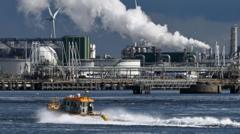
The Port of Rotterdam, Europe's largest freight port, is under growing pressure to transition to greener operations. Located at the delta of the Rhine and Meuse rivers in the Netherlands, the port handles a significant volume of cargo, comparable to all UK ports combined. Its infrastructure is dominated by cranes, bulk carriers, and container stacks, forming a major hub for energy and chemicals.
Environmental Impact
The port is home to five oil refineries, including Shell's largest in Europe, processing vast quantities of crude oil daily. This, coupled with a cluster of chemical plants, contributes to approximately 600 megatonnes of CO2 emissions annually. These emissions are far greater than those from the Netherlands' largest airport, Schiphol, raising questions about the port's potential to become environmentally sustainable.
Legal and Social Pressures
Environmental advocacy group Advocates for the Future is challenging the Port of Rotterdam Authority in court, arguing that it lacks a concrete plan to phase out fossil fuels. The group's lawsuit demands a strategy to reduce the port's dependence on coal, oil, and gas, whose emissions surpass those of many countries. Mark van Dijk, head of external relations at the authority, acknowledges the port's significant emissions, which account for about half of the Netherlands' domestic CO2 output.
Port Authority's Initiatives
The Port Authority has set ambitious targets to cut its emissions by 90% by 2030. Initiatives include developing a hydrogen hub for testing new fuels, investing in onshore power to allow ships to connect to the grid, and supporting alternative fuels like LNG, biofuels, and methanol. Additionally, the Porthos project aims to capture and store CO2 emissions in depleted gas fields.
Advocates' Perspective
Maikel van Wissen, director of Advocates for the Future, argues that the port should leverage its influence to accelerate the shift towards greener operations. He believes that as a state-owned enterprise, the port has a responsibility to adhere to legal emissions reduction obligations. Without a clear plan, he warns, the port may resort to short-term solutions that do not address the root of the problem.
Challenges in Transition
Oscar van Veen, director of innovation at the Port of Rotterdam, emphasizes collaborating with polluting industries to phase them out quickly. However, the port faces challenges as many major emitters are headquartered abroad, making it difficult to enforce stricter environmental regulations without risking their relocation.
Bettina Kampman from CE Delft highlights the need for physical space and improved energy infrastructure to support the port's green transition. The current lack of power cables limits the pace of electrification and other sustainable developments.
Global Context and Conclusion
Emeritus Professor Harry Geerlings of Erasmus University Rotterdam stresses the importance of a global framework to drive ports towards sustainability. He points to the success of the EU's Emissions Trading System and sulphur limits in marine fuels as examples of effective regulation that prompted global compliance.
Despite efforts to reduce its environmental impact, the Port of Rotterdam remains heavily reliant on fossil fuel industries for revenue. The port authority and environmental advocates agree on the ultimate goal of achieving net zero emissions by mid-century. However, they differ on the speed and extent of the necessary changes, reflecting the broader challenges in balancing economic interests with environmental responsibilities.
Source: Original Article