Thousands Gather for Ayatollah Ali Khamenei's Burial in Mashhad
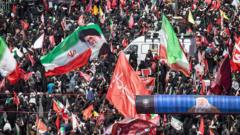
In the holy city of Mashhad, vast numbers of people assembled to honor the late supreme leader of Iran, Ayatollah Ali Khamenei, as he was laid to rest at the sacred Imam Reza shrine. This event concluded six days of national mourning, which extended across five Iranian cities and into neighboring Iraq.
The burial was reported by Iran's state news agency, IRNA, and followed a series of events that included recent military exchanges between Iran and the United States. Tensions have escalated due to these conflicts, threatening to undermine a tentative agreement aimed at ending the ongoing war in which Khamenei lost his life.
Continued Strife Amid Mourning
Prior to the burial, Iran's Revolutionary Guards accused the United States of targeting infrastructure overnight to disrupt the funeral proceedings. They alleged that two railway bridges connecting Tehran to Mashhad were bombed.
Khamenei, along with several family members, perished in an Israeli strike on his Tehran residence, an event that marked the onset of Iran's conflict with the US and Israel. His son, Mojtaba, has succeeded him as supreme leader but has not appeared publicly, allegedly due to injuries from the same attack.
Funeral Ceremonies Extend Across Borders
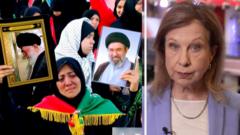
The remains of Khamenei and his family were flown to Mashhad from Iraq, where large processions took place in the Shia cities of Najaf and Karbala. In the afternoon, Iranian television broadcasted scenes of mourners dressed in black, some carrying Iranian flags and red banners symbolizing vengeance, as they filled a central boulevard in Mashhad.
Photographs of the late leader and signs demanding retribution against US President Donald Trump were also visible among the crowd. Trump, alongside Israeli Prime Minister Benjamin Netanyahu, was responsible for initiating the joint attack that instigated the current hostilities.
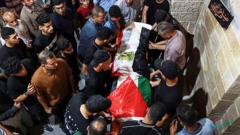
The coffin was eventually transported through the masses to the Imam Reza shrine, a significant religious site that attracts millions of Shia pilgrims annually.
Legacy and Impact of Khamenei's Leadership
Ayatollah Ali Khamenei, born in Mashhad, was a pivotal figure in Iran's political landscape. He became supreme leader in 1989 after Ayatollah Ruhollah Khomeini's death, maintaining control over the country's politics and military, and often taking a stringent stance against the US and Israel.
The meticulously organized funeral was intended to demonstrate Iran's resilience and unity following a brutal conflict and internal unrest. However, the renewed clashes with the US overshadowed the public mourning.
US military activities continued, with President Trump warning of intensified strikes aimed at reducing Iran's influence over the Strait of Hormuz. In retaliation, Iran launched attacks on US facilities in the Gulf region.
Future Prospects for Peace
Earlier, the US and Iran had signed a memorandum to end hostilities and resume diplomatic negotiations concerning Iran's nuclear ambitions and economic sanctions. Despite some progress in recent indirect talks in Doha, Qatar, President Trump expressed doubts about the memorandum's viability.
The potential for a peaceful resolution remains uncertain, with both nations prepared to resume discussions following the conclusion of the mourning period for Khamenei.
Source: Original Article