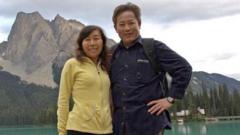
Allegations of Espionage Against U.S. Seismologist
A U.S. scientist specializing in seismology, Chen Youlin, has been detained by Chinese authorities for almost two years on charges of espionage, according to his family. Chen, aged 54, was apprehended in November 2024 while visiting Beijing. This information has been shared by the hostage advocacy organization Global Reach.
Chen's wife, Rong Yufang, who is also a seismologist, expressed disbelief regarding the allegations, describing them as "incorrect and inconsistent" with the transparent and collaborative nature of his work. Chen's research primarily focuses on North Korea's nuclear activities, a nation closely allied with China and often criticized for its nuclear weapons program.
Concerns Over Detention Conditions and Legal Proceedings
Chen's family decided to speak publicly after observing no indications of his release. Rong stated she has not communicated with her husband for over 600 days and is worried about his health. Chinese authorities have reportedly interrogated Chen over 100 times and initially denied him access to legal representation for 13 months, as noted in an interview with Reuters.
Originally from China, Chen became a U.S. citizen in 2011, residing in Boston, Massachusetts. His expertise in seismology involves using data to detect nuclear tests. Chen has managed several projects funded by the U.S. government, and his work with Chinese colleagues has been described as "transparent" by Rong.
International Tensions and Diplomatic Implications
China's foreign ministry stated during a press briefing that their judicial authorities handle cases lawfully and dismissed any notion of wrongful detention. In China, espionage convictions can result in severe penalties, including life imprisonment or even death.
According to Global Reach, there is suspicion within the U.S. government that Chen's arrest may relate to China's alleged nuclear tests, potentially breaching the Comprehensive Nuclear Test Ban Treaty. Chen's knowledge could possibly allow China to understand U.S. seismic detection methods better, thereby creating countermeasures to bypass the treaty.
The treaty aims to prohibit all nuclear explosion tests globally, yet several countries, including the U.S. and China, have not ratified it, though they have established voluntary moratoriums on such testing.
Health Concerns and Calls for Action
The Foley Foundation, another advocacy group, has raised concerns about Chen's health, noting his diabetes, high blood pressure, and high cholesterol. They emphasized the need for consistent access to medical care, which is currently unavailable during his detention.
U.S. Senator Edward Markey, representing Massachusetts, criticized China's treatment of Chen, suggesting it undermines the academic cooperation between the two countries. He expressed hope that increased attention on Chen's situation might compel the Chinese government to release him.
Related Developments
Chen's case has surfaced amid news of another U.S. scholar, Min Zin, being arrested by China. Min Zin, associated with a think tank focused on Myanmar, faces accusations of espionage and threatening Chinese national security.
Source: Original Article