US and Iran Escalate Military Strikes as Ceasefire Ends
The United States and Iran have intensified their military confrontations with a second night of strikes, following a declaration by former President Donald Trump that a ceasefire agreement is no longer in effect. The renewed hostilities have significantly reduced maritime traffic through the crucial Strait of Hormuz, according to observers.
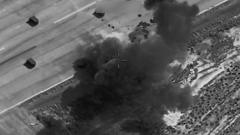
The US military has confirmed that it targeted approximately 90 Iranian military sites, with some located near the Strait of Hormuz. Meanwhile, Iranian officials report that the recent hostilities have resulted in 14 fatalities over the past two days.
Iranian Retaliation and Claims
In response to the US military actions, Iran has reported explosions in several coastal regions and has targeted US assets in Kuwait, Bahrain, and Qatar. The Iranian Foreign Ministry has condemned the US strikes, labeling them as "gross war crimes" and accusing the US of damaging civilian infrastructure, including railway bridges.
The Ministry described the US administration as "evil and psychopathic," claiming that the attacks damaged a railway route between Tehran and Mashhad, where the late Supreme Leader Ali Khamenei is set to be buried. The Iranian Ministry of Health reports that, in addition to the fatalities, 78 people have been injured, with 47 currently hospitalized.
Gulf Nations Affected
Following the US strikes, Gulf nations have reported Iranian retaliatory attacks. Explosions were heard in Bahrain's capital, Manama, while Kuwait intercepted missiles and drones. Qatar has issued a security alert in response to the rising tensions.
The Islamic Revolutionary Guard Corps (IRGC) has confirmed launching strikes on US military bases in Kuwait and Bahrain, describing these actions as the "first phase of the punitive response against the American treaty-breakers." Iran's parliamentary speaker, Mohammad Bagher Ghalibaf, emphasized that the US must pay for its approach to diplomacy.
Impact on the Strait of Hormuz
The ongoing conflict has drastically reduced the number of ships passing through the Strait of Hormuz. According to Phil Belcher, marine director at Intertanko, the number of vessels using the southern route maintained by the US has fallen to single digits, down from 70 a week ago and significantly below the 130 ships seen before the conflict reignited earlier this year.
Belcher noted that recent optimism surrounding shipping in the region, following the signing of a memorandum of understanding between Iran and the US, has dissipated. The cycle of violence is impacting both business operations and the seafarers themselves.
Continued Hostilities and International Reactions
On Wednesday night, several explosions were reported along the Iranian coast, including in the cities of Konarak and Chabahar. Iranian state media reported multiple explosions in Bandar Abbas and missile strikes on the ports of Sirik and Jask. Reports also indicated that the island of Abu Musa was targeted, reigniting a longstanding dispute over its ownership with the United Arab Emirates.
US Central Command stated that its latest strikes aimed to "further degrade Iran's ability to attack commercial shipping and innocent civilian mariners" in the vital waterway. The strikes targeted Iranian military infrastructure along the coastline.
In a statement, President Trump expressed skepticism about further negotiations with Iran, questioning their reliability in honoring agreements. This comes despite the memorandum's provisions for a 60-day ceasefire period for negotiations and the safe passage of vessels through the Strait.
Iran's Foreign Minister Abbas Araghchi responded to Trump's remarks, stating that Iran would respond with action rather than rhetoric. Meanwhile, the US has accused Iran of unjustified aggression against commercial shipping.
Source: Original Article