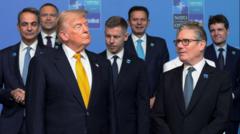
NATO's Unity Under Scrutiny
During a recent NATO summit in Turkey, concerns about the unity of the alliance were brought into focus. NATO Secretary General Mark Rutte asserted that there is indeed cohesion among the member countries. However, persistent questions arise, particularly from the BBC's Frank Gardner, regarding the impact of criticisms from US President Donald Trump.
Criticism from the United States
The discussions at the summit covered a range of global issues, including Russia's ongoing conflict with Ukraine and tensions in the Middle East. Yet, a significant point of concern has been President Trump's repeated critiques of NATO. His comments have been described as "verbal grenades," creating an atmosphere of uncertainty about the alliance's internal solidarity.
Global Issues on the Agenda
Despite these internal challenges, NATO members continue to address key international threats. The conflict in Ukraine remains a critical issue, with member nations seeking cohesive strategies to address Russian aggression. Additionally, the alliance faces the complex dynamics of Middle Eastern conflicts, necessitating a united front to ensure regional stability.
Maintaining Alliance Cohesion
Rutte's comments aim to reassure both NATO members and the international community of the alliance's strength and unity. However, the ongoing criticisms from influential figures like President Trump highlight the delicate balance NATO must maintain to preserve its collective security agreements and strategic goals.
As NATO navigates these challenges, the focus remains on fostering cooperation among its members to effectively respond to global security threats, while also addressing internal disagreements that could undermine its unity.
Source: Original Article