Mourners Gather for Khamenei's Procession Through Iraq
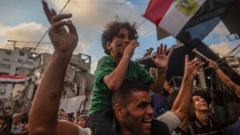
The remains of Ayatollah Ali Khamenei, Iran's former supreme leader, were transported through two of the holiest sites in Shia Islam, located in Iraq, as part of ongoing funeral events. These ceremonies have been continuing for five days, drawing large masses of mourners.
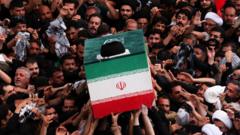
In the city of Najaf, crowds amassed for a procession concluding at the mausoleum of Imam Ali, who was the Prophet Muhammad’s son-in-law and the first Shia Imam. Attendees vied to touch Khamenei's coffin before prayers were offered. The coffin was subsequently flown to Karbala, where it was paraded through more crowds to the Imam Hussein mausoleum.
Significant Turnout and Public Sentiment
Khamenei, who perished on the initial day of the conflict between Iran, the United States, and Israel, is scheduled for burial in Mashhad, Iran. The funeral drew tens of thousands to Najaf, including Mohammed al-Bayati, who expressed to AFP the significance of participating in the funeral of someone who challenged American and Israeli powers.
Amid the procession, chants of "Death to America" and "Death to Israel" echoed as the coffin was transported to Imam Ali's shrine. Video footage captured mourners pressing around the casket as it was hand-carried through the mausoleum. A prominent cleric from Najaf led the funeral prayers.
Further Ceremonies in Karbala
Later that day, the procession continued in Karbala, approximately 60 kilometers north of Najaf. Here, the funeral ended at the shrine of Imam Hussein, whose death in the 7th century significantly deepened the Sunni-Shia divide.
On Tuesday evening, Iranian President Masoud Pezeshkian and other high-ranking Iranian officials traveled to Iraq for the ceremonies. Iraqi Prime Minister al-Zaidi greeted the Iranian delegation, and the government declared a public holiday in observance.
Political Implications and Tensions
Iran's new Supreme Leader, Mojtaba Khamenei, did not attend the ceremonies, having not been seen publicly since reportedly being injured in the same attack that resulted in his father's death.
Meanwhile, diplomatic tensions between the US and Iran have escalated following mutual military strikes in the region. The US accused Iran of attacking tankers in the Strait of Hormuz, to which it retaliated by striking Iranian military sites. In response, Iran targeted US facilities in Bahrain and Kuwait.
US President Donald Trump suggested that a preliminary peace agreement between the two nations might have collapsed. Iran's Parliamentary Speaker, Mohammad Bagher Ghalibaf, accused the US of breaching the agreement and asserted that Iranians remain resolute.
The memorandum of understanding, signed by Trump and Pezeshkian, aimed to reopen the Strait of Hormuz and establish a resolution concerning Iran’s nuclear activities, US sanctions, and a ceasefire. Recent negotiations mediated by Qatar hinted at progress, with further discussions planned post-Khamenei's funeral rites.
Source: Original Article