AI Wealth Fuels San Francisco Real Estate
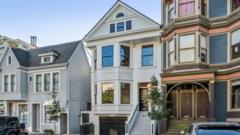
In the upscale Duboce Triangle neighborhood of San Francisco, a luxurious three-bedroom apartment recently attracted significant interest. Priced at nearly $3 million, the property offered an unconventional purchasing option: the owner was open to accepting shares from AI companies like OpenAI and Anthropic instead of cash.
This reflects a broader trend in San Francisco, where the thriving AI industry is a key factor behind the city's escalating real estate prices. "The prices are astronomical," says Daryl Fairweather, chief economist at Redfin, noting a significant increase in home values fueled by the influx of AI wealth.
Rising Property Prices
San Francisco reclaimed its status as the most expensive city for homebuyers in the U.S. in March 2026, surpassing San Jose. The median house price increased by 19% year-on-year in March, followed by 14.5% in April and 14.1% in May. Currently, the median sale price stands at a record $1.76 million, a stark contrast to the nearly $400,000 national average.
AI companies like OpenAI and Anthropic have significantly influenced these trends. Since OpenAI introduced ChatGPT in late 2022, property values in luxury San Francisco Bay Area zip codes have surged, a pattern not seen in regions with less AI investment.
Impact of AI Employee Wealth
High salaries and substantial stock options for AI employees have played a pivotal role. Last October, OpenAI employees sold shares totaling $6.6 billion, averaging $11 million per participant. Similarly, Anthropic employees recently sold shares worth approximately $6 billion.
As both companies prepare for public stock offerings, more employees are expected to become multi-millionaires, further propelling the housing market. Rachel Swann, a listing agent, predicts that current bidding wars will soon be seen as bargains.
Challenges and Market Dynamics
Enrico Moretti, an economics professor at UC Berkeley, notes the AI boom is still in its early stages, with population and employment levels in San Francisco yet to return to pre-pandemic figures. However, he cautions that the sector's evolution may stabilize demand for specialized workers, potentially affecting future salary trends.
Despite this, the immediate impact of AI money on the housing market is undeniable. Real estate agent Matthew Goulden describes the market as "crazy," observing increased all-cash purchases and bidding wars pushing prices well above asking levels.
Social Implications
The growing demand has significant social implications. Some families in San Francisco have managed to secure homes due to AI-derived financial advantages, while others have been forced to relocate. One family, benefiting from OpenAI stock sales, purchased a home in their desired neighborhood, while another had to move to a more affordable suburban area, resulting in a longer commute.
These stories highlight the broader impact of AI wealth on the city's housing market, with one family expressing mixed feelings about their ability to buy amid rising prices. Meanwhile, the Duboce Triangle apartment ultimately sold for $3.2 million, exceeding its asking price, though details about any AI stock involvement in the transaction remain confidential.
Source: Original Article