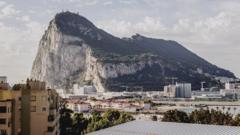
Gibraltar's Border Controls to End After 118 Years
Every weekday, Shilpi Chotrani cycles from her home in La Línea de la Concepción, Spain, to her workplace in Gibraltar. This short commute involves crossing the border into the British Overseas Territory, a daily routine that soon may change profoundly. On July 15, 2026, the border controls that have been in place for 118 years are set to be removed, marking a significant shift in the relationship between Gibraltar and Spain.
Historical and Economic Significance
Gibraltar, home to around 40,000 people, has long been a focal point of military and sovereignty disputes. The border has often been a source of tension, as evidenced by the 13-year blockade imposed by Spain, which ended in 1982. The removal of the border is part of a broader agreement between the European Union and the United Kingdom, crafted in the wake of Brexit.
The anticipated removal of the border is expected to facilitate economic interactions between Gibraltar and Spain, particularly benefiting the Spanish town of La Línea de la Concepción, where unemployment is high. Mayor Juan Franco emphasizes the economic dependency of the town on Gibraltar, noting that a significant portion of local businesses' income comes from Gibraltarian clients.
Implications of the New Agreement
The agreement aligns Gibraltar with the European customs union and Schengen free travel zone, allowing for the free movement of people and goods. However, travelers from outside the Schengen area, including those from the UK, will need to present their passports when entering Gibraltar's airport and port.
Gibraltar's Chief Minister, Fabian Picardo, describes the agreement as transformative for the territory, predicting increased arrivals and business opportunities. This change is seen as a positive development after years of uncertainty following Brexit, with Gibraltarians having overwhelmingly voted to remain in the EU in the 2016 referendum.
Challenges and Adjustments
Despite the optimistic outlook, the new arrangement brings challenges. Goods sold in Gibraltar must now comply with EU regulations, and a new transaction tax is being introduced. This tax will initially be set at 15% and will eventually rise to 17%, replacing the previous import duty. The new regulations and tax regime may affect Gibraltar's competitiveness, particularly concerning imports and adherence to EU standards.
John Isola, managing director of Anglo Hispano Company, expresses relief that the Brexit-related uncertainty is finally being resolved without a hard border. However, he acknowledges the potential difficulties businesses may face in adapting to the new regulatory and tax landscape.
Source: Original Article