China Reaches New Heights in Space Technology
China has marked a significant achievement in its space exploration efforts with the successful landing of a reusable rocket, as reported by state media. This event represents a pivotal moment for China's space program, positioning it alongside other leaders in reusable rocket technology.
A Breakthrough Launch
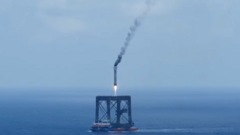
The China Aerospace Science and Technology Corporation announced that the Long March 10B rocket took off from the Hainan launch site in southern China at 12:15 local time (04:15 GMT) on Friday. Following its launch, the rocket's booster returned to Earth approximately six minutes after separating from its upper stage. It was safely recovered on a floating platform, showcasing China's growing capabilities in reusable space technology.
Challenging Established Space Leaders
This achievement suggests that China could potentially challenge the current dominance of the United States in the reusable rocket industry. Companies like SpaceX, founded by Elon Musk, and Blue Origin, owned by Jeff Bezos, have previously pioneered reusable rocket technology with successful landings of their rockets, the Falcon 9 and New Glenn, respectively.
Reusable rockets are a game-changer in space exploration, as they significantly reduce the cost of launching spacecraft. Typically, rockets are considered expendable, with parts being discarded and destroyed during ascent. By reusing boosters, which are the most costly components, space missions become more economical.
Historical Context and Comparison
SpaceX first made headlines in December 2015 with the successful landing of a reusable Falcon 9 rocket from an orbital flight. Blue Origin followed in November 2025 with its New Glenn rocket. SpaceX's Falcon 9 now launches around 150 times annually, with each booster capable of multiple reuses.
China's initial attempt at reusable rocket technology occurred in February with the Long March 10A. This mission involved a controlled descent and splashdown near a recovery platform. The Long March 10B, which can transport at least 16 metric tons to low-Earth orbit, has drawn comparisons to SpaceX's Falcon 9. However, unlike the Falcon 9, the Long March 10B employs "landing hooks" to catch a net on a floating platform for recovery.
Impact on Chinese Space Industry
The successful landing has positively impacted Chinese space companies, with shares of China Spacesat and China Satellite Communications each increasing by 10%, the maximum rise permitted by China's financial regulations.
Source: Original Article